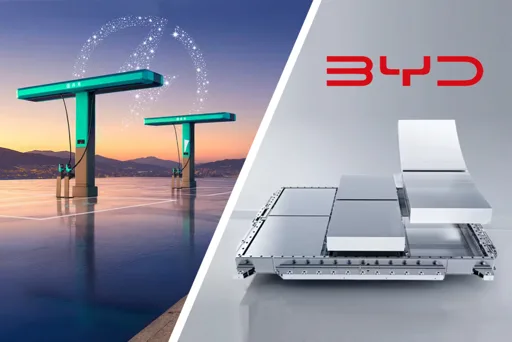
BYD’s 1,500 kW Flash Charging vs Tesla Superchargers
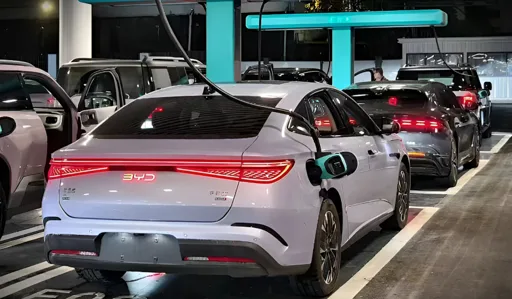 Chinese automaker BYD is making headlines again—this time for its ultra-fast “Flash Charging” network. In just a few months, the company has gone from announcing the technology to deploying thousands of stations across China, with the first rollouts planned for Europe and the UK. Let’s break down five key points from recent reports, then answer a big question: how do BYD’s 1,500 kW chargers really compare to Tesla’s Superchargers, which have long been the benchmark for fast charging?
Record-breaking charging speed
BYD’s Flash Charging stations can deliver up to 1,500 kW (1.5 MW) per connector—numbers that sound almost sci‑fi compared to today’s typical 150–350 kW fast chargers.
On compatible vehicles equipped with BYD’s second‑generation Blade Battery, the company claims:
10% → 70% in about 5 minutes
10% → 97% in about 9 minutes under normal temperatures
That’s fast enough to add several hundred kilometers of range in the time it takes to grab a coffee. In cold weather, where most EVs slow charging dramatically to protect the battery, BYD says the system can still go from 20% → 97% in roughly 12 minutes at –30°C, which is unusually strong performance for an LFP-based pack. These figures are based on ideal conditions: a compatible high‑voltage vehicle, a healthy battery, and a station that can sustain peak output. Even so, they set a new headline bar for how fast “refueling” an EV could become.
 Design and power management
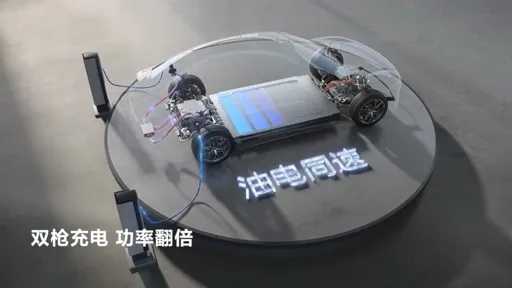
Each Flash Charging station is more like a small power plant than a traditional charger. Most sites have two charging guns, each rated up to 1,500 kW. When two cars charge at once, the station can deliver up to about 1,000 kW per plug, still far beyond most public chargers today.
Key hardware features that make this possible:
Liquid‑cooled cables and lightweight guns: The cables are actively cooled to handle extreme currents, and the charging gun weighs only around 2 kg, mounted on an overhead T‑rail sliding system so drivers don’t have to wrestle with a heavy, stiff cable.
On‑site energy storage: Each station includes roughly 370 kWh of stationary battery storage (often described as two ~185 kWh units). This buffer lets the station deliver short, very high‑power bursts without needing a massive direct grid connection.
Flexible grid connection: Sites can be installed with grid connections as low as ~100–560 kW, then use the on‑site batteries to release up to 1,500 kW in short bursts to a single vehicle. This design helps BYD deploy ultra‑fast chargers even where local grid capacity is limited.
In practice, this means BYD can scale its network quickly, including at retrofitted gas stations and urban sites where a full 1.5 MW grid upgrade would be impractical.
Technology that enables Flash Charging
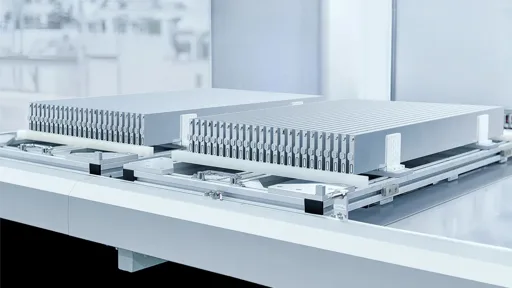
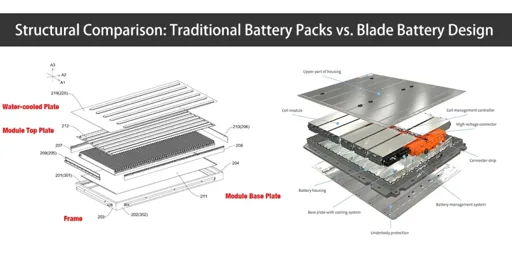
None of this charging speed would matter if the battery couldn’t handle it. The system is built around BYD’s second‑generation Blade Battery (LFP) with a new FlashPass Ion Transport System.
BYD says it has re‑engineered the cathode, electrolyte, and anode to:
Move lithium ions faster through the cell
Lower internal resistance
Reduce heat buildup during extreme charge rates
The result is a pack that can accept very high power without excessive degradation. BYD’s published claims include:
Around 5% higher energy density vs. the original Blade Battery
About 2.5% less capacity degradation over time
Support for the extreme charge rates needed for 5‑minute, high‑state‑of‑charge top‑ups
 Massive, fast network rollout
Speed means little without a network to use it. BYD says it has installed 10,000 Flash Charging stations in China in under six months, and is targeting 20,000 by the end of 2026. That’s an average of dozens of new stations per day, supported by partnerships with energy giants like Sinopec, which is converting some traditional gas stations into Flash Charging hubs. The company is also beginning parallel rollouts in Europe and the UK, with expansion discussed for markets like Brazil and Canada. In Europe, this push aligns with new regulations that encourage high‑power charging corridors, even if local rules currently cap per‑connector power below 1,500 kW in some regions. If BYD hits its targets, it will have built one of the world’s largest ultra‑fast charging networks in under two years—an unusually aggressive timeline compared to most competitors.
Real-world context: not every car can use 1,500 kW
Here’s the catch: very few vehicles today—BYD or otherwise—can actually draw the full 1.5 MW that a single Flash Charging connector is rated for.
The headline numbers apply to compatible BYD models with:
High‑voltage architectures (up to around 1,000V)
Second‑gen Blade Battery packs designed for Flash Charging
Other EVs plugged into a BYD Flash Charger will charge at their own maximum accepted rates, which are often far lower—typically 150–350 kW for current 800V cars, and less for 400V platforms. So while the stations are capable of 1,500 kW, most cars on the road today will only use a fraction of that. The real advantage is future‑proofing: as more vehicles adopt higher‑voltage, higher‑acceptance battery systems, they’ll be able to take fuller advantage of these chargers without needing new hardware.
 What are the specs of BYD’s 1,500 kW Flash Charging system—and how does it compare with Tesla Superchargers?
BYD Flash Charging (2026)
Peak power per connector: up to 1,500 kW
Typical performance:
10–70% in ~5 minutes
10–97% in ~9 minutes (normal temps)
Architecture:
Supports up to ~1,000V vehicle systems
Liquid‑cooled cables and lightweight guns
On‑site ~370 kWh battery buffer per station to smooth grid demand
Network scale:
Roughly 10,000 stations in China
Targeting 20,000 by end‑2026
Early rollouts in Europe/UK, with expansion discussed for Brazil and Canada
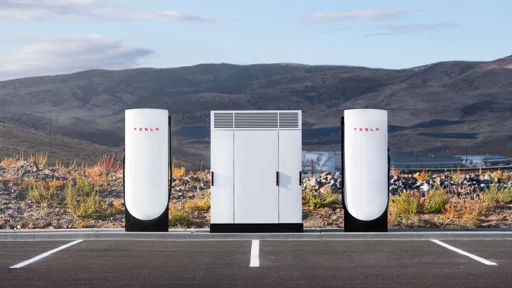 Tesla Superchargers (V4, 2026)
Peak power per stall:
Up to 500 kW for passenger vehicles
Higher power for Tesla Semi trucks
Typical performance:
Around 10–80% in ~25–30 minutes on a 250 kW V3/V4 post
Roughly 15 minutes to add ~170 miles (274 km) of range on capable vehicles
Architecture:
Supports 400V and 800V architectures
V4 hardware can support up to 1,000V systems and deliver up to 500 kW per stall for 800V vehicles
Network scale:
Roughly 60,000 stalls globally built over ~14 years
V4 rollout ongoing in the US and Europe, often co‑deployed with partners like EVgo
Bottom line Comparison
Peak power:
BYD’s Flash Charging is rated at up to 1,500 kW, roughly three times the peak of Tesla’s fastest passenger‑car Superchargers at 500 kW.Charge time:
BYD claims 10–97% in ~9 minutes on compatible cars, versus Tesla’s typical 10–80% in ~25–30 minutes on 250 kW hardware, and faster but still longer on 500 kW V4.Real-world catch:
Today, only a small subset of EVs can even approach these peak rates. Most cars on the road will charge well below 1,500 kW on BYD and below 500 kW on Tesla, limited by their own battery chemistry, voltage architecture, and thermal management.
In other words: BYD is building infrastructure for the next generation of EVs, while Tesla’s network is optimized for the cars on the road right now—and for near‑future models that can use 500 kW.
So yes—on paper, BYD’s 1,500 kW Flash Charging system is significantly faster than Tesla’s current Supercharger network. The bigger question is how quickly more vehicles and more regions can actually use that speed in daily life.
Over the next few years, expect to see:
More EVs designed to accept higher charge rates
More regulatory clarity on ultra‑high‑power charging in Europe and North America
Direct competition between BYD’s Flash Charging network and other high‑power initiatives, including Tesla’s V4 expansion and rival 800–1,000V systems from Geely/Zeekr and others.
The race isn’t just about who has the biggest number on a spec sheet—it’s about who can turn that number into a reliable, everyday experience for drivers.
Comments
good kind of article.
2026-09-04